
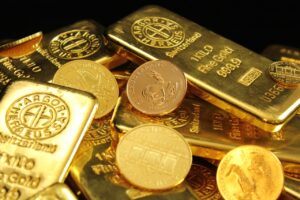
Gold has served as the ultimate store of value for thousands of years, yet its price movements in the modern economy are often dictated by a complex, dynamic relationship with the global reserve currency—the US Dollar (USD). This article explores the enduring value of gold, its inverse dance with the dollar, the institutional reasons for its accumulation, and the current factors driving its price surge.
Why Gold Has Enduring Value
The value of gold is not tied to a single government or bank; rather, it is derived from a unique combination of physical properties, scarcity, and historical precedence, making it the quintessential “safe-haven” asset.
-
1. Scarcity and Indestructibility: All the gold ever mined in human history would fit into a cube roughly 22 meters on a side. This scarcity, combined with its resistance to corrosion and tarnish (it never rusts), ensures that its supply remains limited and its physical form endures. Unlike paper currency, it cannot be printed into existence.
-
2. Safe-Haven and Inflation Hedge: Gold has a long-standing reputation for preserving purchasing power during periods of economic instability. When inflation reduces the value of fiat currencies, investors turn to gold to protect their wealth, as its intrinsic value is generally unaffected by currency devaluation.
-
3. Historical and Cultural Significance: From ancient pharaohs to modern jewelry markets in India and China, gold has been universally accepted as a symbol of wealth, power, and status. This collective, cultural belief in its value forms a bedrock of demand that transcends economic cycles.
The Inverse Dance: Gold and the US Dollar
On the international market, gold is predominantly denominated in US Dollars. This simple fact creates a crucial, often inverse relationship between the two assets.
| USD Value | Gold Price | Reason |
| Rises (Stronger USD) | Falls (Lower Gold) | A stronger dollar makes gold more expensive for buyers using other currencies (like Euros or Yen), reducing global demand for the metal. |
| Falls (Weaker USD) | Rises (Higher Gold) | A weaker dollar makes gold relatively cheaper for foreign buyers, boosting international demand and pushing its dollar price higher. |
While this inverse correlation holds true in most market conditions, it can occasionally break down during extreme global crises (e.g., the initial phase of a pandemic or major war), where both the dollar and gold may rise simultaneously as investors rush into all perceived safe assets.

Why Central Banks Are Accumulating Gold
In recent years, central banks, particularly those in emerging economies, have become record-breaking buyers of physical gold. Their accumulation is driven by deep strategic concerns about the global financial order:
-
De-Dollarization and Diversification: The most significant reason is to reduce dependence on the USD as a reserve currency. Following events like the freezing of Russia’s foreign reserves, many nations view holding a significant portion of their reserves in gold as a defense against geopolitical risk and potential sanctions. Gold, unlike sovereign debt or currency held abroad, carries no counterparty risk.
-
Hedge Against Global Monetary Expansion: Massive quantitative easing and money printing by major central banks have fueled concerns over long-term inflation and the devaluation of fiat currencies. Gold serves as a tangible, stable asset to protect their national wealth against this risk.
-
Monetary Stability and Confidence: Holding large gold reserves provides a foundation of confidence in a nation’s financial stability, particularly in times of balance of payments crises or domestic currency volatility. Central banks view gold as a long-term, strategic asset for systemic security.
Factors Driving Gold Prices Higher
The recent surge in gold prices to new record highs is the result of several overlapping macroeconomic and geopolitical forces:
-
Sustained Central Bank Demand: The consistent, large-scale institutional buying by central banks acts as a structural floor for the market and absorbs available supply, creating upward pressure.
-
Geopolitical Instability: Ongoing conflicts (e.g., the Russia-Ukraine war, Middle East tensions) and global trade frictions elevate investor anxiety. During such crises, investors flock to gold as the premier safe-haven asset.
-
Inflation Expectations and Economic Uncertainty: While inflation may moderate, lingering concerns over persistent price increases, coupled with recessionary fears and slowing global growth, encourage both institutional and retail investors to allocate capital to gold.
-
US Federal Reserve Policy: Expectations of the Federal Reserve lowering interest rates make gold more appealing. Lower rates reduce the opportunity cost of holding gold, which is a non-yield-bearing asset.25 Conversely, higher interest rates make fixed-income assets (like bonds) more attractive than gold, potentially dampening its price.